The Guardian Angel Charges Rent
The good news arrived first, the way it usually does. A deal. The Strait of Hormuz would reopen, toll-free, and energy markets gave a sigh of relief. Then everyone got to the fine print.
There will be no tolls, the President posted, for sixty days, and no tolls after that either. Unless they are imposed by and for the United States of America. For services rendered. As the guardian angel of the Middle East.
The memorandum of understanding (MOU) signed last week paused a war that had kept roughly a fifth of the world’s oil bottled up behind a single chokepoint since February. It also set a sixty-day clock for nuclear talks, now running in Switzerland, with Pakistan playing host and Iranians and Americans under the same roof for the first time in forty-five years. The Vice President flew in sounding optimistic.
Money, Power, and Sex
Meanwhile the real argument was never about peace. It is about who gets to charge for the water. Iran says it will not collect tolls, only fees, for services rendered: pilotage, navigation, environmental monitoring, that sort of thing. Washington says the strait must stay open and free, then floats charging for it anyway, for services rendered. Tehran created a Persian Gulf Strait Authority to do the billing. Two governments, sworn enemies for forty-five years, have arrived independently at the same place. The question remains: who will have the power in the Strait?
The bigger point that everybody seems to be ignoring is the complete notion of freedom of the seas and how that’s defined by the world. And that norm that legality is seemingly coming to an end, all for the sake of not rocking the boat. That is, the hell with legality. Just don’t upset the global economy.
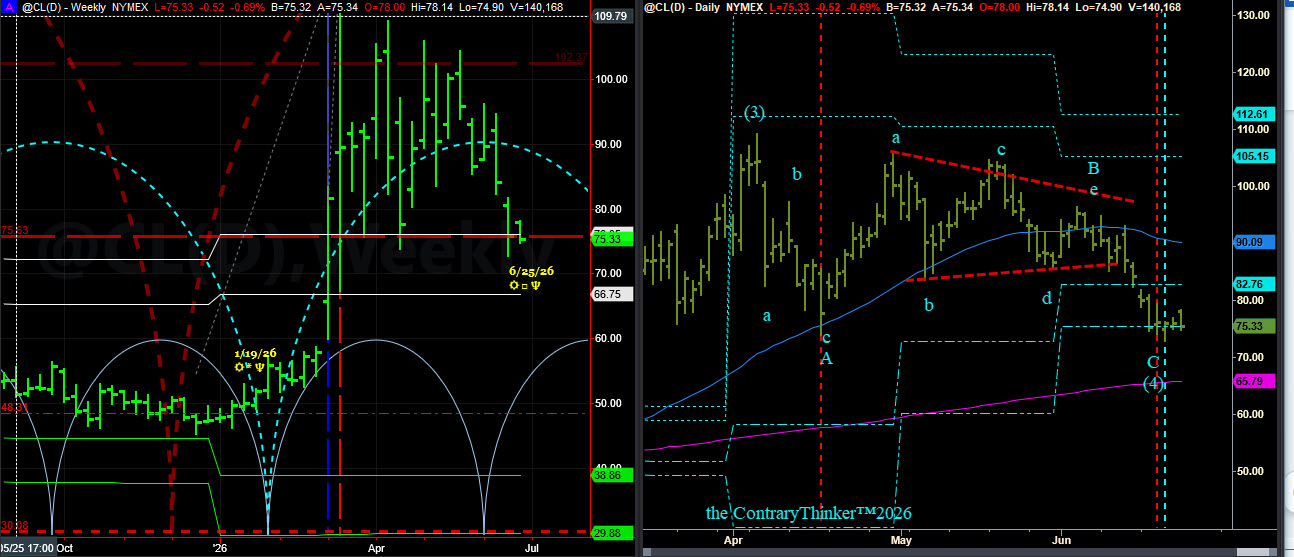
The war, the closure, the months of blocked tankers: the market took it in on the way down and took the relief in on the way back up. That is finished. What it has not absorbed is the precedent, and the precedent is not American.
Iran built the tollbooth first. Washington is copying it. Ideas carry no copyright, so America, the country that guaranteed free passage for eighty years, can lift the meter from the regime it just spent four months blockading and pass it off as its own. A waterway that was free to cross now has a price on it. Such new financial systems like that do not come back off. The sixty days of free passage are a concession, not a settlement. When the clock runs out, the toll is now the default, not the exception.
What I always ask myself: What are the headlines hiding on the back pages? Those pages that nobody reads. So while the majority are focused on the diplomats dining above the lake, the same logic was running on land, quietly, a few hundred miles west. Open-source investigators mapping southern Syria describe what one analyst calls a low-noise occupation: roughly a thousand square kilometers taken since the Assad government fell, built position by position, off any official map. Diplomats claim compliance on paper. The military draws the line on the ground and lets the paper catch up later.
Establish the fact, ratify it afterward.
Hormuz is the same move at sea. Close the strait, reopen it as a favor, attach a fee to the favor, and let the world adjust to paying. The chokepoint was always the leverage. The toll is just the leverage sending an invoice.
This is what fragmentation looks like up close. Not tanks and flags. Tollbooths. The old order promised a single open system underwritten by one power. The thing replacing it is a patchwork of chokepoints, each priced by whoever holds it, on sea lanes and land borders alike, justified by services nobody asked for. Every faction in this story, Iranian, American, Israeli, is a competing sovereign running the same play. None of them is defending the commons. They are dividing it.
So watch the fee, not the ceasefire. The ceasefire is the headline, and it may even hold for a while. The fee is the back-page item, and it is the one that reprices everything downstream: every cargo, every insurance book, every barrel that has to clear a waterway that now, for the first time in the lifetime of anyone reading this, costs money to cross.
Inflation has always been geopolitical. This is geopolitics handing every man the bill.
The market has not come to grips with this yet. It will. Inflation is sticky. And the ContraryThinker™ feels strongly that volatility will catch up.